Showing posts with label Saab 9-1. Show all posts

Thursday, January 6, 2011

Saab Officials Confident that 2011 will be a Turning Point in the Company’s History


Saab sold just 31,696 cars globally in 2010, after having cut its sales target from 45,000 to 30,000-35,000 vehicles, due to the restructuring of the brand’s supplier base. However, with fourth quarter (2010) sales up 129% compared to 2009, Chairman Victor Mullen believes that Saab “is firmly establishing itself as an independent car manufacturer”.

Last year was especially difficult for the Swedish automaker, as the low inventory decimated sales figures.

“One of the largest challenges in 2010 was to restock our dealers around the world to normal levels again, especially in a market like the United States, where you need dealer stock in order to be able to sell cars”, Muller said in a statement on Wednesday. “For instance, when we acquired the company, there were a mere 500 cars left on the ground in the United States. Normal inventory levels in this market should be at 6,000-7,000 units”.

Optimum inventory levels are still a long way from reality, but, during the past 12 months, Saab did pick up some momentum, which, coupled with the launch of new models, should help the maker achieve the projected sales volume of 80,000 units for 2011.

Saab will invest US $1 billion into its recovery plan, with the focus being on new models. The 9-4X crossover, set to debut in May, is of them. Next up is the ageing 9-3 due for replacement in 2012. Furthermore, Saab wants to revive the 92 model of the ‘50s, in the form of a modern compact car, which, if priced correctly, should add much needed volume to sales.

The Trollhättan-based manufacturer will continue to expand its dealer network as well, targeting markets like China and Russia and it expects to be profitable in 2012, with sales projected to reach 120,000 units.

By Csaba Daradics

Source: Autonews [sub. req]


_______________________________GALLERY_______________________________


Friday, November 26, 2010

Saab Targets Chinese and Russian Markets, Unlikely to Develop a Diesel 9-4X


Saab has revealed plans to begin distribution to China and Russia. Deals for both countries will be signed before the end of the year, while Saab is also pondering the assembly of cars in the Far East. In other news, the Swedish maker also said that it's unlikely that we'll see a diesel-powered 9-4X any time soon.

In regards to China, Saab CEO Jan Ake Jonsson, told reporters on the sidelines of the Los Angeles Auto Show: "Until we launch the new 9-3 at the end of 2012, it will be just a couple of thousand units (annually), all based on imports. As we lead up to this, we have to make a decision if and when we are going to introduce local manufacturing in China."

If Saab decides to assemble cars in China, production would concern the next generation 9-3, as the 9-5 sedan and 9-4X would be imported to the country.

Until then, Saab wants to define the dealer network first, which will have 10 to 15 showrooms, spread out in five or six cities. Mr. Jonsson didn't reveal any further information about the company's plans in Russia.

Speaking about the 9-4X, the Saab CEO said that there are no current plans for the introduction of a diesel engine to the range, due to the short payoff period it would have.

"If you then look at the life cycle of the vehicle, typically five or six years, before we actually have a diesel engine, we have to find one, we have to test it, we have to install it, validate it, and you are two years into the life cycle. And then you have a very short payoff period. So I think it is unlikely" Jonsson said.

By Csaba Daradics

Source: Autonews


_______________________________GALLERY_______________________________


Monday, September 27, 2010

Saab Confirms BMW Talks on Engine Supply, 2012 9-3 May be the First Model to Benefit from the Deal


The next generation of Saab models may very well be powered by BMW engines if negotiations between the two automakers are successful. Following widespread media speculations on the matter, Spyker N.V., the parent company of the Swedish carmaker confirmed talks with BMW. Here's the official statement:

"Spyker Cars N.V. ("the Group"), a holding company that owns subsidiaries which produce and sell premium automobiles under the Saab and Spyker brands, has noted recent press speculation about the possible supply relationship with BMW. The Group confirms that talks are ongoing and will give further details once a final agreement has been reached."

A report from Bloomberg citing an unnamed person with direct knowledge of the matter said the first Saab to benefit from the proposed deal would be the next 9-3 model, due for release in 2012. According to the source, Saab will make use of a new 222-horsepower that BMW is developing and has not yet been introduced in any of the Bavarian automaker's cars. The same engine would find its way under the hood of the new 9-5.

The person said the two automakers are also in talks about Saab buying diesel engines from BMW as well as the possible use of the MINI Countryman's platform for the future 9-2 premium sub-compact.

A final announcement on the deal could be made as early as the end of this week. We will continue to follow this matter and will provide updates on any new developments.

Source: Spyker / Bloomberg


Friday, May 28, 2010

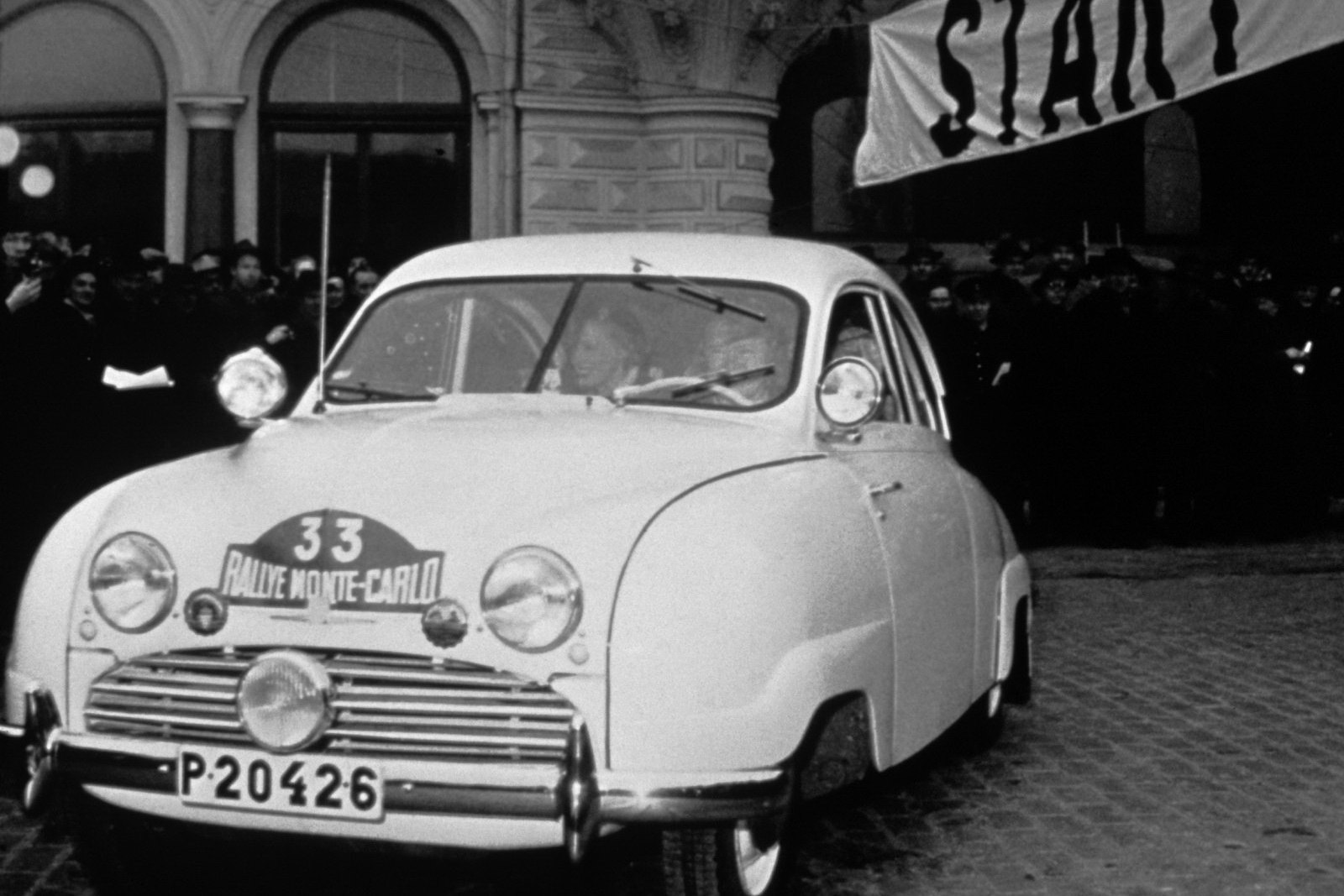
Spyker Searching for a Partner to Build Modern-Day SAAB 92


Saab's automobile range may be expanded in the near future with a new small car inspired by the Swedish firm's teardrop-shaped 92 model of the 1950s if the company's CEO Victor Muller gets his way.

In a telephone interview with Bloomberg, Muller revealed that his company is in talks with automakers to share technology and a platform for the modern-day 92 or in Saab's current lingo, the 9-2.

While Muller declined to say with whom he's been negotiating, the owner of Spyker Cars NV said that the new 9-2 would keep the teardrop-shape of the original model that was in production between 1949 and 1956.

"Discussions are already ongoing," said Muller. "That will be on my plate for the next 100 days."

If Saab's boss manages to close a deal with an automaker, we'll probably have to wait another two to three years to see the final production version of the Swedish firm's retro-answer to BMW's MINI and Fiat's 500.

Via: Bloomberg

Photo Gallery of Original Saab 92

Monday, March 3, 2008

Video: Saab 9-X BioHybrid Geneva Show Unveiling

Not even 24 hours before the Geneva Motor Show opens up its gates, Saab gave journalists an exclusive preview of its 9-X BioHybrid Concept (pics and details here) that foretells the upcoming 9-1 premium hatch. The concept is equipped with a 200hp1.4-liter BioPower turbo engine that can run on bioethanol E85 fuel. With a solar cell panel on its roof, the 3-door sporty hatch also runs on energy extracted from sun and used to charge the hybrid’s battery pack both when the vehicle is in motion and when it is stationary. –Video after the jump

Geneva Show: Saab 9-X BioHybrid Concept Previews BMW 1-Series Adversary

While Saab supports that the 9-X BioHybrid is a “vivid vision of what a future compact car from Saab could look like”, we’ll just bluntly say that the Geneva Show concept previews the shape of the forthcoming 9-1 premium hatch that will enter the market in 2010. The 9-X BioHybrid’s design is clearly inspired from Saab’s earlier Aero-X and 9X concept cars and although its rear-end sort of reminds us of a bread-van, overall, we like it. The interior looks like it came straight from a sci-fi movie, so there’s no point of making any comments as it will never find its way into production.

Underneath its sleek body, Saab’s concept hides a 1.4-liter BioPower turbo engine partnered by GM’s next-generation Hybrid system. The 1.4-liter engine generates 200 hp on E85 and an even more impressive 280 Nm (207 lb.ft) of torque. The new hybrid system features a lithium-ion battery and a significantly higher power capability to capture more energy and more electric boost than the current GM Hybrid system.

According to Saab, the 9-X BioHybrid can go from nought to 100 km/h (62 mph) in 7.9 sec on E85 and 8.3 sec when using regular gasoline. As for fuel consumption, the concepts need a mere 4.9 lt of gasoline or 6.4 lt of E85 for every 100 km (48 and 36.8 MPG respectively). –More details and pictures after the jump


Press Release

Saab 9-X BioHybrid:

Boosting Efficiency in Compact Design and Performance

The Saab 9-X BioHybrid concept is a vivid vision of what a future compact car from Saab could look like. It is designed to reflect the priorities of youthful customers who seek progressive looks, responsible performance and high-tech communications, all in a sporty, fun-to-drive package.

Exploring design themes from Saab’s award-winning Aero X and earlier 9X concepts, the 9-X BioHybrid also demonstrates the potential for ultra-efficient power from a 200 hp (147 kW), 1.4-liter BioPower turbo engine backed by GM’s next-generation Hybrid system. Projected combined cycle CO2 emissions of just 105 g/km on E85 fuel are testimony to the promise of this package (see separate release for details).

The interior showcases an entirely new expression of Saab’s driver-focused cockpit design, together with innovative, seamless connectivity for personal nomadic devices and a rear cargo deck with a ‘low friction’ loading system.

“This car is all about efficiency in design and performance,” says Anthony Lo, Director of Advanced Design at General Motors Europe, who led the 9-X BioHybrid design team in co-operation with the Saab Brand Center in Sweden.

With its ‘turbine’ wheels placed at all four corners, minimal bodywork overhangs and an extended roof line, the proportions of the three-door Saab 9-X BioHybrid bring a dynamic, new dimension to conventional compact ‘hatchback’ looks.

The smooth ‘fuselage’ bodywork, now without any visible handles or door mirrors, the bold ‘wraparound’ window graphic and deep front grille are all themes inspired by the Aero X coupé concept shown at Geneva two years ago.

The car’s distinctive ‘shooting brake’ silhouette and rear functionality are developed from the 9X multi-role concept shown at Frankfurt in 2001. “You could say we designed this car from back to front, “says Lo. “The shape of the 9X is right for a car of this size, and the longer roof line helps the aerodynamics as well as providing more rear headroom and interior space.”

Echoing Saab’s roots in aircraft design, the 9-X BioHybrid also explores the potential for using active aerodynamics to reduce drag – and fuel consumption – at cruising speeds. Above 70 kph (43 mph), the upper and lower bodywork is reshaped as the roof spoiler automatically extends to further lengthen the roof line and an underbody diffuser is deployed from the bottom of the rear bumper.

The four-seater cabin introduces an entirely new execution of Saab’s driver-focused cockpit design. The central, floor-mounted console, with its angled controls and displays, is now eliminated. Instead, the driver- focused layout incorporates a main instrument panel that sweeps out from the top of the door moulding, arching across the driver. The embedded 3-D graphics appear to be ‘frozen’ in ice, continuing a Scandinavian design theme first seen in the Aero X.

Reflecting the needs of youthful customers, who expect easy access to multi-media both inside and outside the car, Saab has co-operated with Sony Ericsson in providing seamless in-car connectivity for a range of nomadic devices. The result is a wireless interface for streaming data, entertainment and satellite navigation functions for display and use. The interface also allows the simultaneous use of multiple devices when passengers are in the car.

At the rear, the cargo deck features an electrically-powered slide-out floor, which is activated when the bottom half of the split tailgate drops down The floor, and the back of the folding rear seats, is covered by ‘high friction’ rubber carpeting, which ‘grips’ items and holds them securely in place. For easy loading and unloading, aluminum bars automatically rise up and down as the tailgate is opened and closed.

The treatment of light is an important part of Scandinavian design and this is evident in the use of variable, white ambient lighting inside the cabin. The level of suffused illumination can be changed in intensity from bright, cold to warm and soft. It’s a personalized feature that could even be programmed, for example, to reflect the pattern of the changing seasons

“This car shows how our concept work can be carried forward into a compact format,” adds Anthony Lo. “It has a number of features which we will be developing further, such as the new driver-focused design theme, the importance of clean, uncluttered surfaces and the easy, seamless connectivity inside the car.”

Technical Specifications

BioPower Engine:

Transversely-mounted, front wheel drive

1398 cc. Four cylinders Bore/stroke: 73.4/ 82.6 mm. Aluminum cylinder head, cast iron block

DOHC, chain-driven. Four valves per cylinder.

Forged steel crankshaft, steel connecting rods. Aluminum pistons, oil spray cooled.

Direct Injection with centrally-mounted injectors. VVT, inlet and exhaust

Sodium-filled exhaust valves

Compression Ratio: 10.2: 1

Intercooled turbocharger. Max. Boost Pressure: 1.6 bar

Dual-mass flywheel. Saab engine management

Max power (E85):......... 200 hp (147 kW) @ 5000 rpm.

Max.torque (E85):........ 280 Nm (207 lb.ft) @ 1750-5000 rpm

Max power (gasoline):... 170 hp (125 kW) @ 5200 rpm.

Max.torque (gasoline):.. 230 Nm (170 lb.ft) @ 1500-5200 rpm

Hybrid System

Electric motor/generator with lithium ion battery pack.

Electric power boost, regenerative braking, fuel cut-off, automatic engine re-start

Transmission:

6-spd manual gearbox, automated clutch, sequential gear selection, steering wheel controls

Suspension:

Front: Damper/coil struts, aluminum lower A-arm. Anti-roll bar.

Rear: Torsion beam, two trailing links, coil springs and dampers. Anti-roll bar

Steering:

Rack and pinion, Electrical power assistance.

Wheels, Tires:

21inch, 245/35R21

Brakes:

Hydraulic, dual circuit, vacuum booster. Discs: 345 mm / 345 mm (all ventilated)

Performance Data

(projected figures)

0 - 100 km/h (0-62 mph): 7.9 secs (E85)

8.3 secs (gasoline)

80 -120 km/h (50-75 mph), 5th gear: 8.8 secs (E85)

11.2 secs (gasoline)

Top Speed, 6th gear: 216 km/h /134 mph (E85)

192 km/h / 119 mph (gasoline)

Fuel consumption (combined cycle): 6.4 l/100km (E85)

4.9 l/100km (gasoline)

CO2 emissions 105 g/km (E85)

117 g/km (gasoline)